Official Google Blog: Introducing Google Buzz

Posted February 10th, 2010 in Commentary by jayshao

Official Google Blog: Introducing Google Buzz: “We’ve relied on other services’ openness in order to build Buzz (you can connect Flickr and Twitter from Buzz in Gmail), and Buzz itself is not designed to be a closed system. Our goal is to make Buzz a fully open and distributed platform for conversations. We’re building on a suite of open protocols to create a complete read/write developer API, and we invite developers to join us on Google Code to see what is available today and to learn more about how to participate. “

(Via Google Blog.)

While this looks a lot like twitter/brightkite/facebook activities, I do wonder if the real game-changer is integrating with Email – e.g. making Lifestream activities mainstream (though Facebook has become pretty mainstream) – or mainstream for people who haven’t necessarily sought out social networks.

I also wonder how this fits in with Wave? Is wave a technology platform under/in parallel to this? Slightly different? Just 2 teams at Google doing slightly different things “let a thousand flowers bloom and all that”?

Google releases Wave protocol implementation source code – Ars Technica

Posted July 28th, 2009 in Commentary by jayshao

Google releases Wave protocol implementation source code – Ars Technica: “At the Google I/O conference earlier this year, the search giant revealed an intriguing new communication service called Wave that aims to deliver concurrent messaging and collaborative editing in a single cohesive environment. The underlying Wave Federation Protocol is designed to make it possible for third parties to host their own interoperable Wave instances. Google intends to open the source code of its own implementation in order to encourage widespread adoption of the protocol. The company took its first major steps in that direction on Friday by releasing the source code of its Operational Transform (OT) code and a simple client/server reference implementation that is built on top of the protocol. This code, which is available under the open source Apache Software License, will give developers a way to start experimenting with the protocol and potentially even building their own Wave-compatible services.”

(Via http://arstechnica.com.)

I hate to hop on the bandwagon, but I have to admit – Wave looks like the most revolutionary item I’ve seen in a while – in a full-on game changer sense. Not so much just because of the cool widgetry that Google’s built, but because it’s a protocol – with the flexibility and potential that implies.

Building on some of the interactions we’ve seen with IM, Blogging/Trackbacks, Twitter, and other messaging, Wave looks to standardize, federate, and embed real-time, multiparty communications to the point where it will become part of the fabric of the web. If Web 2.0 = comments and trackback conversations – this feels a lot more like Web 2.5 – the implementation we really wanted when we first tried to take the web from a document-based publishing platform to a conversation-enabled collaborative medium.

And… Open-Source production-quality reference implementation – what could be better. I have to say, not an small number of my off-work hours are going to be spent looking at embedding Wave into… everything… Particularly given that Federation (though still a little nebulous) is a first-class citizen in the platform.

From Twitter: Facebook Meets Life Realities

Posted March 10th, 2009 in Commentary by jayshao
Its a bit creepy when Facebook shows you the birthday of a friend who has passed away. The FB kids weren’t thinking about death and divorce.

http://twitter.com/gwachob

Twitter Stats

Posted January 3rd, 2008 in Personal by jayshao

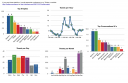
Continuing the meme of looking at twitter usage, here’s mine:

twitter-stats.png

Heavily JA-SIG slanted, but Sakai is starting to gain…

SakaiCon Recap

Posted December 8th, 2007 in Sakai, Work by jayshao

Sitting on a flight, returning from the Sakai conference — still trying to take everything in. There’ll probably be more musing on the significance of specific items coming up, but things that struck me enough to want to brain dump were:

  • There was wide consensus during the planning sessions that there’s a desire to focus on quality: reliability, testing, performance, and other traits, over new feature development.
  • The community is moving from a development -> production mindset. The transition of many of the core schools from pilots or development efforts into full-blown production instances has certainly changed priorities and outlooks.
  • Increased desire to pick up open-standards in preference to inventing our own. JSR-168 (Unicon demoed a cool Portlet-Tool for Elluminate integration), JSR-170 and the good work Ian is doing to integrate with repositories like Jackrabbit and Xythos, CAS Authentication (vis-a-vis Dan M.’s sweet CAS-embedding UserDirectoryProvider)
  • There’s a lot of commercial activity around Sakai. RSmart, Unicon, Oracle, IBM, bit players like Mark Norton & Zack Thomas. I sat in a presentation about the work I did with FIDM for CampusEAI. I even talked with another developer who has already resigned (as of Jan 1) from his university to join his part-time venture (with others) full-time. Certainly a large, vibrant marketplace.
  • Many sub-groups are organizing around Sakai. In addition to our very own NYC Regional group, there are groups in California, Australia, the Netherlands, and other places. They’re holding events, sponsoring training, and moving forward.
  • It’s not just regions — there are an increasing number of functionally aligned teams. Developers, Designers, and Managers are the best organized and served. I also saw a lot of User Support people or academic technologists as well. This is the group I suspect may be the next to organize — a CAFE track focused on bringing user support people up to speed or sharing experiences/resources would probably be really valuable.
  • Lots of parallel activities. Many examples of SIS integrations, library integrations, documentation & training, tool development. Unfortunately, communication barriers and other difficulties seem to be producing several duplicate/parallel efforts (e.g. Yale’s SignUp tool, EDIA’s signup tool, Stanford’s efforts around this space) though there is a desire to collaborate.
  • Some stuff is still too hard: authentication integration, CourseManagement integration, libraries work, documentation, training are all pain points, especially for smaller teams/schools.
  • Strong community. It’s easy to get lost in a group of smart, affable people moving towards a common purpose. Had an excellent time, and there’s a good sense of camaraderie weaving throughout the community. People are friendly and helpful.
  • Twitter – yeah, it’s kind of narcissistic, but at an event or convention it can certainly be a lot of fun. Both to do self-organizing (e.g. dinner?) and to pull in people who are in the circle, but not present.